>

Melamine foams with aluminum lamination - Basotect® G+ | self-adhesive and with aluminum lamination

Melamine foams with aluminum lamination - Basotect® G+
non-adhesive with aluminum lamination
self-adhesive and with aluminum lamination

Melamine foam with aluminum foil lamination on one side and self-adhesive on the other side to serve as a heat shield and for soundproofing.

The melamine resin foam is laminated with a thin, pure aluminum foil and self-adhesive on the one side. This cover layer makes it impermeable to water and air (vapor barrier) and the surface can therefore be cleaned easily. The material can be used for thermal insulation and for soundproofing to a limited extent. Melamine foams are used in numerous applications thanks to their excellent flame-retardant properties. We offer this high-quality material in standard sheets of different thicknesses or in custom dimensions on request. Order this excellent acoustics product in just a few clicks.

Item no.
 
Label
 
Surface
 
Length
mm
Width
mm
Thickness
mm
Color
 
Bulk density
kg/m³
Detail
 
Basic price
/m²
Price
/pce
Delivery period
 
Graduated price
 
quantity


1.
Select shape
2.
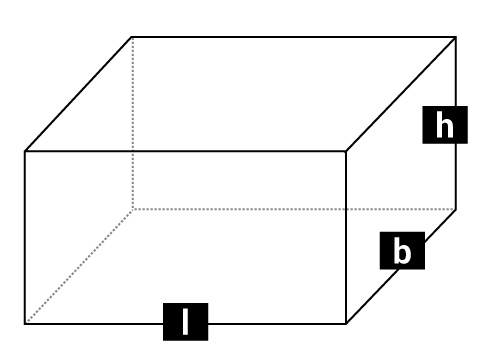
Mass input
mm
mm
mm
your cut
Material
Melamine foams with aluminum lamination - Basotect® G+ | self-adhesive and with aluminum lamination
Ground
L:
B:
H:
1-2 weeks

Key features


  • diffusion tightness (vapor barrier)
  • Thermal conductivity 0.032 W/mK
  • Thermal stability -150°+180°C
  • Fire recistance BKZ 5.2
  • Fire recistance EN 45545

Application areas


  • rail vehicle construction
  • Vehicle construction
  • Industrial cladding
  • Heater - air conditioning HKL
  • Air ducts

Frequently asked questions (FAQ)

The Basotect melamine foam with an aluminum layer laminated on the front serves as heat shield. With the combination of Basotect melamine foam and the coated aluminum front side, hot sources can be easily shielded.

The melamine foam standard panels are supplied as untrimmed raw panels. The ordered usable dimensions are guaranteed, but protruding material (foam, fleece, SK-foil etc.) is possible.

Basotec? melamine foam has the BKZ 5.2 (hardly inflammable with medium smoke formation)

Our melamine foams Basotect? meet both of these requirements in equal measure, highly sound-absorbing and with very good thermal insulation properties.

The foams can be ordered already equipped with a one-sided self-adhesive. With the self-adhesive made of high-quality acrylate, the foam adheres to most surfaces easily and permanently. The adhesive selection can be found in our online shop. In individual cases, depending on the installation situation, the weight or the difficult environmental conditions, it may be necessary to fix the foam insulation materials mechanically in addition. Heavy foils without self-adhesive device are permanently fixed with 2-component polyurethane adhesive from our product range due to their high own weight. In general, our processing instructions must be observed.

Sound attenuation can be understood as the prevention of sound spreading through the absorption of airborne sound. The sound energy is converted into inaudible oscillation waves during sound absorption and as a result the reflection at a boundary surface is reduced. The acoustics within the room are improved and the noise is reduced.

By using foam absorbers or foam bass traps, the reverberation time is reduced evenly across the entire frequency spectrum. Thereby a clearer and drier room sound is created. With the targeted use of absorbers, especially the disturbing initial reflections from the walls can be attenuated. The booming bass range can be specifically absorbed by bass straps. The sound image of the room through the use of absorbers becomes more homogeneous, softer and more lively.

The positioning of the acoustic elements on the wall and ceiling can be determined by using a mirror. Viewed from the listening position, the mirror is thereby shifted to the ceiling or wall until the speakers are visible in it. This is the perfect position for the most important acoustic elements. The Silphon bass traps are most effective when positioned in the corners of a room, because of the sound reflection from the ceiling, walls and floor. In principle you start with the lineup behind the boxes. The siphon bass traps can be stacked until the desired absorption is achieved.

Materials such as concrete, glass or tiles are placed under sound-reflecting surfaces, which reflect the sound waves up to 100% and as a result do not insulate or absorb the sound. To reduce the volume (sound pressure) and the reverberation time in hard rooms, hard surfaces must be reduced and replaced by surfaces with sound absorbers that absorb the sound. The sound absorbers allow the sound waves to penetrate the structure and as a result the sound energy is converted into heat or kinetic energy.

In general, it can be said that the more surface of walls and ceiling is covered with foam materials, the less sound can be reflected from them. From experience, it can be assumed that approx. 40% - 50% of the ceiling and wall surfaces should be covered. With 100% cladding there is no more natural sound and this leads to unpleasant acoustics.

In general, the thicker the foam, the better and more efficient the sound absorption. If mainly middle or higher frequencies have to be optimized, good results can be achieved already from a thickness of about 30 mm. If low frequencies (bass tones) are involved, thicknesses from approx. 50 mm are advantageous. In general, it should be noted that the lower the frequencies and the higher the room, the thicker the foam panels should be. If a material is too thin, it only absorbs treble. If the material is thicker, it also absorbs low frequencies

Basically, neither pyramid foams nor nubbed foams are suitable for sound insulation to the outside. These two sound insulation materials mainly reduce noise or reverberation in rooms and are used to absorb sound. Above all, the room acoustics are improved. The nubbly foam as well as our pyramid foam are produced "swiss made" in the Vibraplast AG. The pyramids are produced by cross-cutting on a horizontal contour cutting machine, the nubs are produced with a profiling roller. Since the production of pyramid foam takes longer, the price is correspondingly higher than that of nubbed foam. The panel thickness defines which frequencies are absorbed. The thickness of the foam defines which frequencies are absorbed. Thin foam boards tend to absorb in the higher frequency range, while thicker foam boards tend to absorb in the lower frequency range. For the same material thickness, nubbed and pyramid foams are equivalent. It is up to you to decide which look suits which room better.

The foam standard boards are delivered as untrimmed raw boards. The ordered useful dimensions are guaranteed, protruding material (foam, fleece, SK-foil ecc.) is but possible."

By using this website, you consent to the use of cookies and our privacy policy. Privacy policy agree.
If you have any questions, please contact info@vibraplast.ch

This content is reloaded